Seminar February 3 with Irina Olimpieva, Silent Dissent: Exploring Russian Civic Activism as a Form of Opposition to the War in Ukraine

Silent Dissent: Exploring Russian Civic Activism as a Form of Opposition to the War in Ukraine

🎤Irina Olimpieva, Founder and Executive Director of the Center for Independent Social Research, Inc. (CISR USA)
📅February 3, 15.15-17.00
🏢Zoom: https://lnkd.in/eJCkhJVw

Abstract:  Since the start of Russia’s full-scale invasion of Ukraine, the apparent absence of mass antiwar protests inside Russia has often been interpreted as evidence of popular indifference or support for the war. Survey data seem to reinforce this conclusion, while street-level mobilization has remained limited even during moments of heightened political tension, such as the announcement of “partial” mobilization. This talk challenges such interpretations by shifting attention away from visible protest toward less conspicuous but socially meaningful forms of opposition that emerge under conditions of repression.
Drawing on a research project conducted since August 2022, I explore humanitarian volunteerism as a form of silent resistance. The analysis focuses on a case study of an informal volunteer network based in St. Petersburg that assists Ukrainian families who fled the war, found themselves on Russian territory, and are seeking asylum in Europe. Operating primarily through Telegram, volunteers meet refugees arriving in the city, arrange temporary accommodation, provide food, medicine, clothing, and financial assistance, and coordinate transportation to the border.

 

Seminar January 20 with Mane Tsaturyan: “Armenia’s Foreign Policy Options…”

Mane Tsaturyan: “Armenia’s Foreign Policy Options Within China’s Belt and Road Initiative: A Small State Perspective” 

Place & Time

Date: 20 January, 15:15-17:00 

Place: NI:C0933 seminar room, 9th floor, Niagara, Nordenskiöldsgatan 1

Or Online: https://mau-se.zoom.us/j/68831376873, Meeting ID: 688 3137 6873

Bio

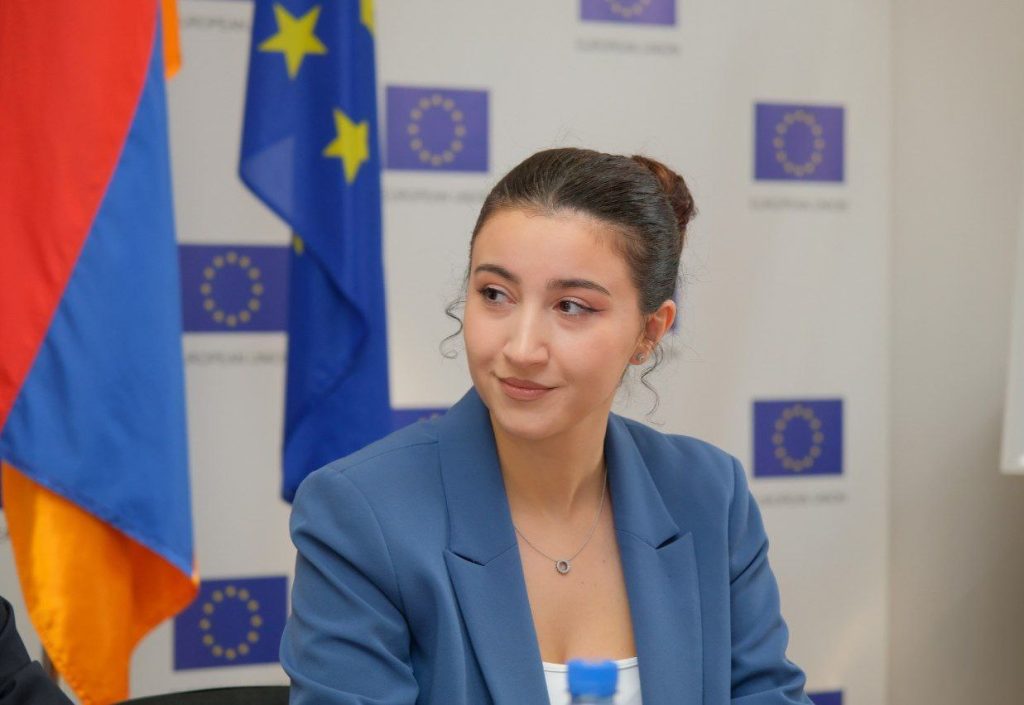
Mane Tsaturyan is an International Relations specialist currently working at the Delegation of the European Union to Armenia, where she prepares briefings, assessments, and detailed political reports on developments in Armenia and the wider region. She holds a Master’s degree in European Interdisciplinary Studies from the College of Europe in Natolin, where she was awarded the United Nations Award for the Best Thesis on “Europe, Multilateralism, and the UN.” She also holds a Master’s degree in World Politics from Yerevan State University, and is an alumna of the Diplomatic Academy of the MFA of Armenia. Her areas of expertise include EU foreign policy, multilateralism, the UN, the migration–foreign policy nexus, security, China, and Armenia.

Abstract

How does a small state like Armenia navigate one of the world’s largest infrastructure and economic projects, China’s Belt and Road Initiative (BRI)? In this talk, I will present my research exploring Armenia’s foreign policy choices within the BRI framework, especially after the 2020 Nagorno-Karabakh War. Using small state theory, we will look at the unique challenges and opportunities Armenia faces in balancing security concerns with the desire for economic integration. I will highlight why, despite the BRI being over a decade old, Armenia remains largely outside its main corridors, and what this reveals about the delicate strategies small states use to engage with global mega-initiatives.

Welcome to RUCARR seminar 20th January!

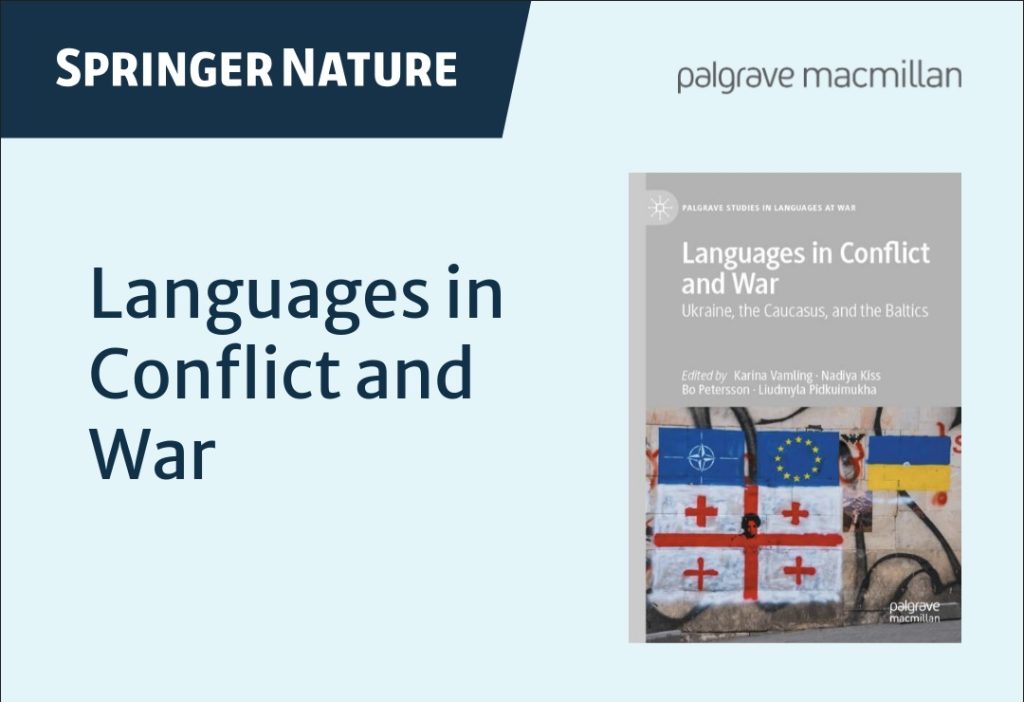
New anthology – Languages in Conflict and War. Ukraine, the Caucasus, and the Baltics

New publication is out: “Languages in Conflict and War. Ukraine, the Caucasus, and the Baltics”, available as ebook.

Publisher’s webpage: 

https://link.springer.com/book/10.1007/978-3-032-08419-4…

Book series:

Palgrave Studies of Languages at War.

Editorial team: 

Karina Vamling, Nadiya Kiss, Bo Petersson, Liudmyla Pidkuimukha.

Table of contents and contributors:

https://link.springer.com/book/10.1007/978-3-032-08419-4#toc

1     Introduction: Languages in Conflict and War. Karina Vamling, Nadiya Kiss, Bo Petersson, Liudmyla Pidkuimukha
2     Language and Identity Erasure: Russia’s Strategy in the Occupied Regions of Ukraine. Liudmyla Pidkuimukha
3     Language Shift, Displacement, and Abrogation: Narratives of the Ukrainian Writers in Times of War. Nadiya Kiss
4     Depopulation of the Hungarian National Minority in Transcarpathia as One of the Consequences of Russia’s War against Ukraine. Halyna Shumytska and Fedir Shandor
5     The Sororization Effect in Interviews with Refugees: Negotiation of Positionality, Shared Knowledge, and Emotions. Lesya Skintey and Dariia Orobchuk
6     Linguistic Sovereignty and Vernacular Biopolitics: Estonian Russophones as a Postcolonial Phenomenon. Andrey Makarychev
7     Between Hopes and Anxiety: A Critical Analysis of Discourses Surrounding Latvian Russian-Speaking Youth during the Russo-Ukrainian War. Lena Hercberga
8     Surviving Suppression: Circassian Language Preservation in Russia and the Diaspora. Lidia Zhigunova
9     “It all starts in the family”: Placing Discourses on the Role of Families in Circassian Language Preservation into a Historical-Political Context. Valeriya Minakova
10   The Future of the Indigenous Circassian Language amid Increased Russification of the Kuban Region and the Russian War in Ukraine. Lars Funch Hansen
11   Official Language Ecology in Contemporary Georgia. Mariam Manjgaladze 
12   Functions of the Russian Language in Modern Georgia. Tinatin Bolkvadze
13   The Linguistic Landscape of Georgia—Diachronic and Synchronic Approaches. Maka Tetradze 
14   Conclusions. Karina Vamling, Nadiya Kiss, Bo Petersson, Liudmyla Pidkuimukha