Caucasian deep coalitions? A case for the future relational critical political imaginary
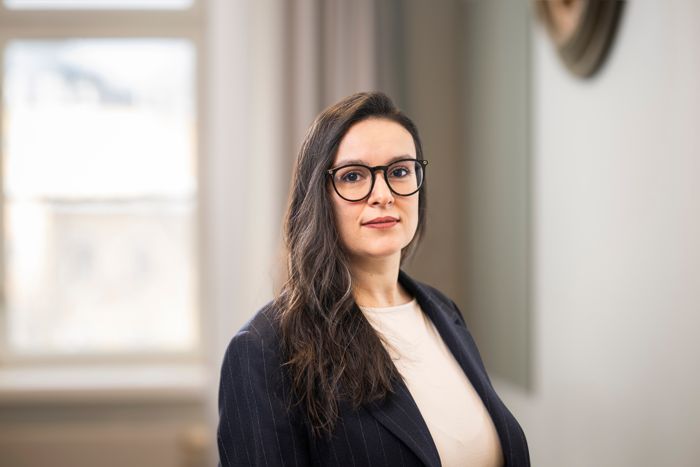
Bio Madina Tlostanova
Madina Tlostanova professor of gender studies at Linköping University, is a decolonial feminist thinker and fiction writer. Her research interests include epistemic and aesthetic aspects of decoloniality; the postsocialist human condition, fiction, and art; critical future inquiries and critical interventions into complexity, crisis, and change. Tlostanova`s most recent books include A new Political Imagination, Making the Case (co-authored with Tony Fry, Routledge, 2020), Decoloniality of Knowledge, Being and Sensing (Centre of Contemporary Culture Tselinny, Kazakhstan, 2020, Kazakhian translation – 2023), and Narratives of Unsettlement. Being Out-of-joint as a Generative Human Condition (Routledge, 2023). Currently she is working on a monograph Not by Leviathan Alone. An exercise in Post-nation-state Worlding.
 Time: 5 May, 17:30-19:00
Place: Niagara (Nordenskiöldsgatan 1, 211 19 Malmö), NI:C0E11 or Zoom: https://mau-se.zoom.us/j/69619037103
Abstract:
An integral perception of the Caucasus as a single community/space has gradually disappeared throughout the 20th and particularly in the 21st century while the Caucasus has become divided into often hostile to each other nation-states with divergent allegiances while its Northern part has remained a Russian colony. Despite these current geopolitical divisions, a long-going transversal intra-Caucasian community, determined not only culturally or historically but also geographically and even climatically, is no news to Caucasians and may become important in the future. Caucasian community grounded in Lugonesian deep coalitions that allow to keep our differences yet also find intersections for refuturing – is not a myth, but a viable onto-epistemic and ethical-political stance, which may help to survive. Yet, the Caucasus continues to be represented in media, arts and in area studies through typically modern/colonial Orientalist or alarmist security lenses, leaving no legitimate space for any bottom-up alternative frameworks of relational political and social life and images of the shared future coming from Caucasian thinkers, artists and activists themselves. Bringing these voices forward internationally, as well as facilitating democratic discussions with each other, is necessary for the Caucasians to be able to reimagine themselves regionally in the upcoming decades of the intensified enviro-climatic and geopolitical crises when the main challenge will be that of physical survival.
Moderator: Karina Vamling, Professor Emerita of Caucasus Studies, Malmö University